What should a first-time manager know before their first difficult conversation?
By Ross Mercer · Updated
A first-time manager should know three things before a first difficult conversation: the dread is normal and no reason to wait; most hard talks are simple corrections that need specifics, one clear change, and a check-in; and a few topics, such as firing, layoffs, health, pregnancy, harassment, or pay, need HR or an employment attorney first.
Why do hard conversations feel so hard for new managers?
Most people are promoted because they were good at the work, then discover the job is mostly conversations, and the hardest ones come with no training. The role matters more than it feels like from inside the dread: Gallup reports that 70% of the variance in team engagement is determined solely by the manager.
The dread itself is information, not weakness. It says the conversation matters and you don’t yet have the words. Close that gap with preparation and most of the dread goes with it. The managers who look calm feel it too; they have simply done it often enough to walk in with a plan.
What is your default when it gets uncomfortable?
Everyone has a move they make under pressure. Knowing yours is most of the work, because the fix is usually to do exactly what your default talks you out of.
- Default
- Too nice
- What it looks like
- Qualifiers, “we” when you mean “you,” ending on “you’re doing great”
- The correction
- Let the hard sentence stand on its own, once
- Default
- Too hard
- What it looks like
- Verdict first, “always” and “never,” no room for an answer
- The correction
- Add the warmth back on purpose; end with a real question
- Default
- Avoiding
- What it looks like
- Hints in team meetings, working around the problem, rescheduling
- The correction
- Put a date and time on it; the third reschedule means go now
Why is avoiding the conversation the expensive option?
Skip the conversation and the problem doesn’t pause. The errors keep shipping, the rest of the team reads your silence as approval, and your own frustration builds until the eventual talk comes out sharper than it should. The person who could have fixed a small thing in March is blindsided in September, when it has become a reason they might lose the job. A hard ten minutes now usually beats a worse hour later.
Who plays HR if your company has none?
Plenty of companies with 20, 40, even 80 people have no HR department. Someone still does the job. Find out who before you need them.
- Situation
- Ordinary feedback, a first performance talk
- Bring in before you act
- Nobody. This one is yours.
- Situation
- A formal review rating with consequences, a performance plan
- Bring in before you act
- The owner, plus the PEO or HR consultant if you have one
- Situation
- Anything about health, disability, pregnancy, or leave
- Bring in before you act
- The owner and the PEO or HR consultant; an attorney if it gets complicated
- Situation
- A harassment or discrimination report, or a complaint about you
- Bring in before you act
- The owner at once, and usually an employment attorney
- Situation
- A layoff or a termination
- Bring in before you act
- The owner and an employment attorney, and the PEO for pay and benefits
Which legal moments should a new manager recognize?
You don’t need to know the law. You need to recognize when it is in the room, so you stop and ask. Three federal thresholds come up most. Anti-discrimination law covers employers with 15 or more employees, and age discrimination (40 and older) employers with 20 or more (EEOC). The Family and Medical Leave Act covers private employers with 50 or more employees and gives eligible employees up to 12 workweeks of leave in a 12-month period (U.S. Department of Labor). Many states go further and reach smaller employers.
And once someone has complained about discrimination or harassment, retaliation is its own violation: “The EEO laws prohibit punishing job applicants or employees for asserting their rights to be free from employment discrimination including harassment” (EEOC). This page is general information, not legal advice.
Where to go next
For the conversation itself, read how to start a difficult conversation with an employee and how to give negative feedback.
Sources
- Gallup — How Influential Is a Good Manager? (Suellentrop & Bauman, June 2, 2021)
- U.S. EEOC — Do the federal employment discrimination laws apply to my business?
- U.S. EEOC — Retaliation
- U.S. Department of Labor — Family and Medical Leave Act
More guides
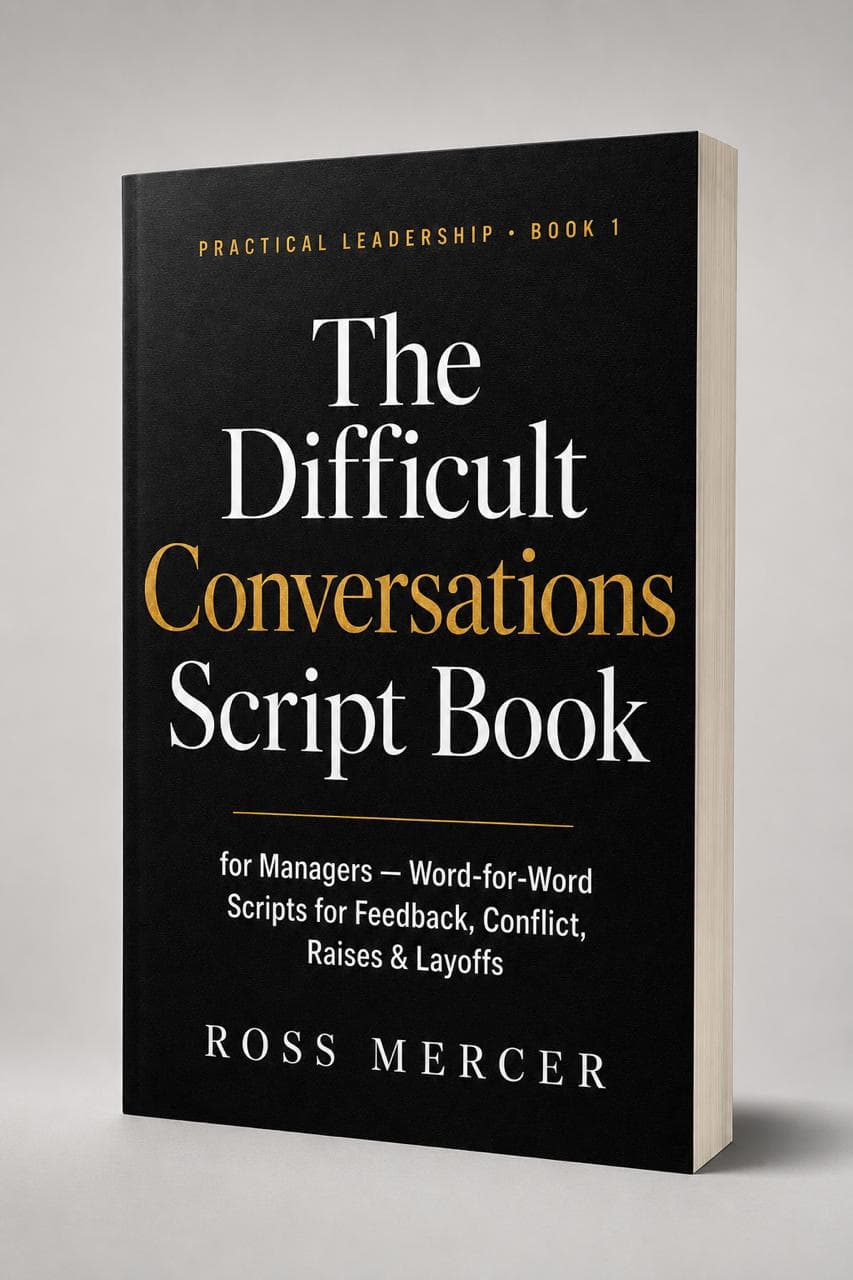
The Difficult Conversations Script Book
Word-for-word scripts for feedback, conflict, raises, and layoffs. E-book $14.99 · with the Conversations Toolkit $79.