How do you give negative feedback to an employee?
By Ross Mercer · Updated
Give negative feedback in private, early, and with specifics: name two or three concrete examples, explain the impact, state the one change you need, then ask what is making it hard. Describe behavior, not character (“the last three reports didn’t reconcile,” not “you’re careless”) and book a check-in one to two weeks out.
What should you prepare before giving negative feedback?
Five minutes of preparation decides most feedback conversations. Walk in with facts, not a mood. A vague sense that someone’s “attention to detail is slipping” gives them nothing to fix and everything to argue with. “The last three invoices had the wrong PO numbers” gives them a fact to work with.
- Two or three specific examples, with dates.
- The one change you need. List six things and they will fix none.
- A private place and a sensible time — not 4:55 on a Friday, not right before they present to a client.
- A clear picture of “good”: what does the fixed version look like?
- An honest check on yourself: is this a performance gap, or are you annoyed? Feedback given to vent doesn’t work.
Why describe behavior instead of character?
A label like “careless” or “not a team player” can’t be fixed, because nothing specific happened in it, so the only sane response is to deny it. A description of what happened can be fixed. The Center for Creative Leadership’s Situation-Behavior-Impact (SBI) model turns this into three beats: where and when it happened, what the person did, and what it cost.
Before: “You’re really dropping the ball lately. You’re not reliable.” After: “In yesterday’s client call, the deck still had last quarter’s numbers in it. That’s the second time this month a draft went out without the update, and the client noticed. What happened?”
A negative feedback script you can adapt
This is the core of Script 1 in The Difficult Conversations Script Book. Fill in the brackets, then say it out loud once before the meeting.
“[Name], got a few minutes? It’s about the [last few deliverables]. Here’s what I’m seeing: [the last three reports came back with numbers that didn’t reconcile]. That’s a problem because [it slows the whole close, and it puts your name on work that isn’t at your level]. What I need going forward is [every report cross-checked against the source file before it comes to me]. That’s the bar. I’m telling you this because I know you can hit it. So tell me: what’s making it hard right now?”
Why does the compliment sandwich fail?
Wrapping criticism in praise feels kind, but people hear the bread and miss the meat. It’s a way of dodging the direct part, and the person often walks out unsure anything was wrong. The stronger version is fully direct about the problem and fully clear that you are on their side: “I need the reports cross-checked before they come to me. Every time. I know you can hit it, and I want you doing this work for a long time.” Kim Scott calls this combination Radical Candor; Brené Brown puts it as “Clear is kind.”
How often should managers give feedback?
More often than most do, and in shorter conversations. Gallup reports that 80% of employees who say they have received meaningful feedback in the past week are fully engaged, and that employees are 3.6 times more likely to strongly agree they are motivated to do outstanding work when their manager gives daily rather than annual feedback. Gallup also found that 15 to 30 minutes is enough for a meaningful conversation, if it happens frequently.
The practical lesson for negative feedback: give it while the problem is small. A correction in week two is ten minutes. The same issue raised in month six is a performance plan.
What should you not say?
- “Everyone’s been noticing…” — It’s your feedback. Own it instead of hiding behind a faceless crowd.
- “You always…” / “You never…” — Absolutes invite a fight about the one exception.
- “Does that make sense?” — It pressures a yes. Ask “What’s your read?” instead.
- “There’s no need to get emotional.” — Name the feeling instead: “I can see this is frustrating. Take a second.”
What should you do after the conversation?
Send a short, factual note the same day with the one change you agreed on and the check-in date. Hold the check-in one to two weeks later. When the fix shows up, say so: “The last two came through clean. Thank you.” That sentence makes the next hard conversation easier.
One caution. If the person has recently raised a complaint about discrimination, harassment, or pay, talk to HR or an employment attorney before any negative step. In the EEOC’s words, “The EEO laws prohibit punishing job applicants or employees for asserting their rights to be free from employment discrimination including harassment.”
Sources
- Center for Creative Leadership — Use Situation-Behavior-Impact (SBI) to Understand Intent
- Gallup — How Effective Feedback Fuels Performance (McLain & Nelson, updated Jan. 19, 2024)
- Gallup — A Great Manager’s Most Important Habit (May 29, 2023)
- U.S. EEOC — Retaliation
More guides
- How do you start a difficult conversation with an employee?
- What should a first-time manager know before their first difficult conversation?
- How do you put an employee on a performance improvement plan (PIP)?
- How do you tell an employee they didn’t get the promotion?
- How do you talk to your team about AI changes at work?
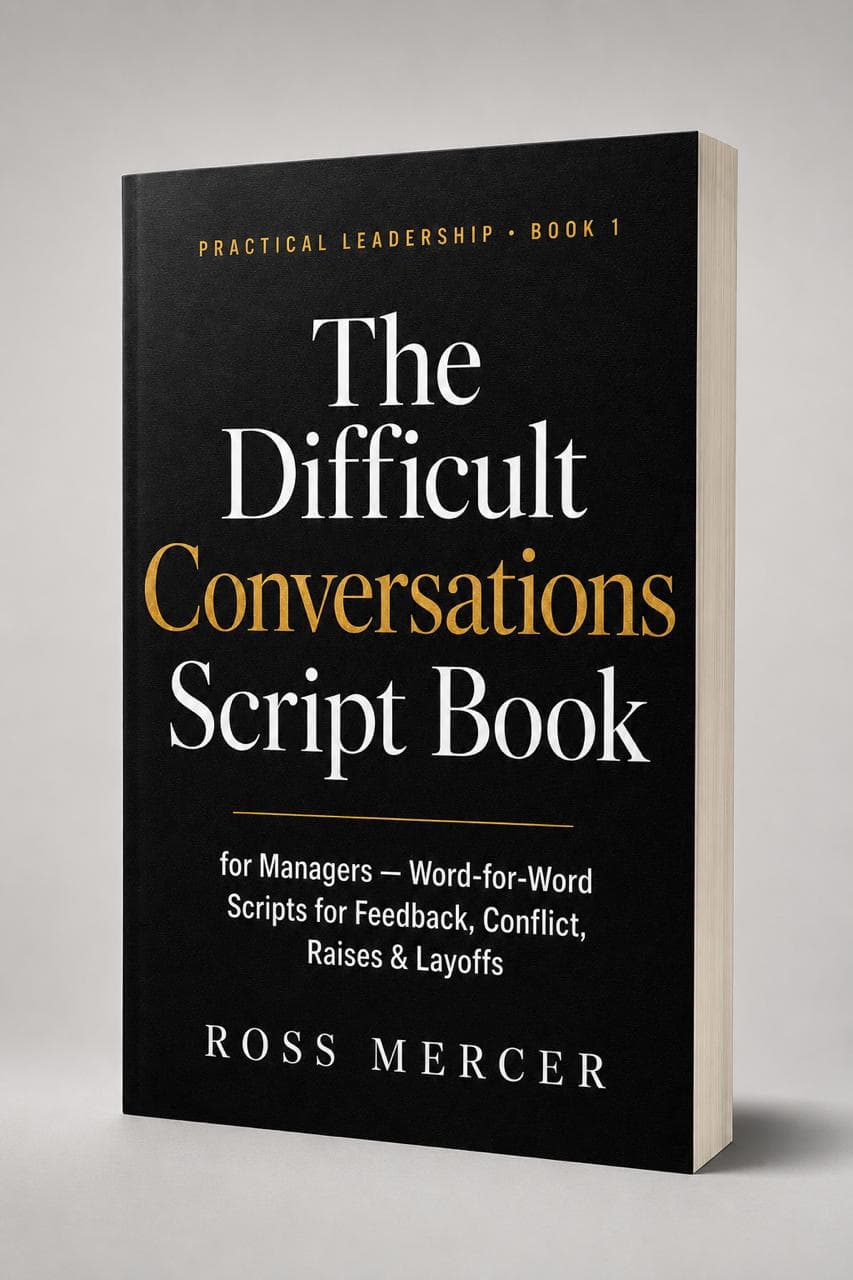
The Difficult Conversations Script Book
Word-for-word scripts for feedback, conflict, raises, and layoffs. E-book $14.99 · with the Conversations Toolkit $79.