How do you put an employee on a performance improvement plan (PIP)?
By Ross Mercer · Updated
A performance improvement plan (PIP) is a formal, written plan that gives an employee specific, measurable goals, a fixed timeline, named support, and a clear statement of what happens if the bar is or isn’t met. Build it with HR, use it only after informal conversations have failed, and deliver it as a real path to succeed.
What is a PIP, and when should you use one?
A PIP is the step after the informal talks. You have raised the gap more than once, with examples, and it hasn’t closed. The plan turns those conversations into something written down, with a bar the person can check themselves against and a date when you will both look at the result.
It also carries legal weight. A PIP often becomes evidence in any later dispute, which is why its structure, timeline, and wording belong with HR. Nothing in it should surprise the person: if the plan raises criticism you never mentioned before, the process has already failed them. Fix that first.
One honest test before you start: do you want this person to pass? People do recover from PIPs. But if you have already decided they won’t, a plan is the wrong tool, and dressing a decided outcome as a PIP is dishonest and legally risky.
What goes into a performance improvement plan?
Every line of the plan should be something a third person could check. If a goal can’t be measured, it can’t be met, and it can’t be fairly judged.
- Element
- The gap
- What it says
- What has been happening, with dates and facts
- Test before it goes in
- Matches what you already told them informally
- Element
- Goals
- What it says
- The one to three things that must change
- Test before it goes in
- Specific: “every report reconciled against the source file,” not “improve accuracy”
- Element
- The bar
- What it says
- How each goal is measured
- Test before it goes in
- Checkable by someone other than you
- Element
- Timeline
- What it says
- How long the plan runs and when it is reviewed
- Test before it goes in
- Set with HR, long enough to show a pattern, not a sprint
- Element
- Support
- What it says
- Coaching, training, freed-up hours, weekly check-ins
- Test before it goes in
- Things you will actually provide, with dates
- Element
- If the bar is met
- What it says
- The plan closes and normal working resumes
- Test before it goes in
- Worded by HR, not a guarantee of future employment
- Element
- If it isn’t
- What it says
- The honest consequence, in plain words
- Test before it goes in
- No fog: a later decision should never be a surprise
- Element
- Sign-off
- What it says
- Who acknowledges the plan, and where it is kept
- Test before it goes in
- Follows company process for format and storage
What should you check before the meeting?
- Build the plan with HR. If your company has no HR department, build it with the owner and, ideally, an outside HR consultant or employment attorney who has written these before.
- Make sure every goal is genuinely achievable. If you can’t picture this person hitting the bar and the plan closing, the plan is broken.
- Don’t promise anything that sounds like a guarantee. “Hit these and your job is safe” can later be read as a contract; many plans state that employment stays at-will during and after the plan. Let HR word the outcome clause.
- Check the timing. If the person has recently complained about discrimination or harassment, asked for an accommodation, or returned from leave, the plan needs an especially careful look. The EEOC lists giving “a performance evaluation that is lower than it should be” and increased scrutiny among actions that can count as retaliation.
- Plan your first two sentences. The person will hear your intent in them: support, and serious.
A PIP script you can adapt
This is the core of Script 15 in The Difficult Conversations Script Book. The plan itself comes from HR; this is the human conversation around it.
“[Name], we’ve talked a few times about [the performance gaps], and they haven’t closed the way we both hoped. So I’m putting a formal plan in place, a performance improvement plan, and I want to walk you through it properly. This is serious, and I’m not going to pretend otherwise. It’s also a structured path to get back on track, and I mean that. Here’s the plan: [specific goals], measured by [specific bar], over [timeline]. Here’s the support I’m committing: [coaching / training / weekly check-ins]. If you hit these, [the plan closes and we’re back to normal working]. If the gap doesn’t close, [the honest consequence]. What questions do you have? Is anything in here unclear or unfair?”
How do you handle the most common reactions?
Mean the last question of the script. A goal the person thinks is rigged is a goal they won’t chase. If they have a point, adjust the bar or the timeline now, with HR.
- “Nobody told me it was this bad.” If the earlier talks happened, walk through them calmly. If they are right that this is the first clear signal, pause the plan and fix the process with HR before it goes live.
- “So you’re just building a case to fire me.” Try: “If I’d decided that, I wouldn’t waste both our time on a real plan. I set goals you can hit, and I want you to hit them.” Every check-in you hold will say more than that sentence.
- They hear “I’m fired.” Say it straight: “It is serious. But people do come back from these, and I built this so you can pass it.” Mean it, or don’t say it.
- They over-promise to make it stop. Slow the eager yes down: “I don’t need a sprint this week. I need the bar held over the whole [timeline].”
What should you not say when delivering a PIP?
- “This is just a formality.” It is either a lie or it undercuts how serious the plan is.
- “Between us, I don’t think you’ll make it.” Devastating, dishonest, and legally reckless.
- Vague goals like “improve your communication.” A plan with targets nobody can measure is unfair and useless.
- “HR is making me do this.” Own it. It is your assessment, formalized.
- Anything that hides the consequence. Softening it now makes a later termination feel like a betrayal.
What happens during and after the plan?
Put the plan in writing per HR process, with sign-off, and book every check-in before the first meeting ends. Then show up. A PIP where the manager vanishes is a setup, and anyone who later reads the file can see it. Employment attorney James McDonald, speaking at SHRM25, recommends weekly or biweekly check-ins and puts it bluntly: “If the manager cannot commit to that check-in and feedback process, don’t start the PIP.”
Keep notes the same day: the date, who was there, what happened in observable terms, what the employee said, and what you agreed. Record the gains as well as the gaps, and tell the person when they are improving, not just at the end. Leave out guesses about motive, character labels, and anything about health or home life.
At the end, honor what you said. If they met the bar, close the plan cleanly and stop treating them as on probation. If they didn’t, and the process was fair, the next step goes through HR and usually an employment attorney. Federal anti-discrimination law applies to employers with 15 or more employees, and the age law to employers with 20 or more, according to the U.S. Equal Employment Opportunity Commission; many states reach smaller employers. This page is general information, not legal advice.
If the problem is still small enough for an informal talk, start with how to give negative feedback to an employee instead.
Sources
- U.S. EEOC — Retaliation
- U.S. EEOC — Do the federal employment discrimination laws apply to my business?
- SHRM — 8 Steps for Effective Performance Improvement Plans (Roy Maurer, July 14, 2025)
More guides
- How do you give negative feedback to an employee?
- How do you start a difficult conversation with an employee?
- What should a first-time manager know before their first difficult conversation?
- How do you tell an employee they didn’t get the promotion?
- How do you talk to your team about AI changes at work?
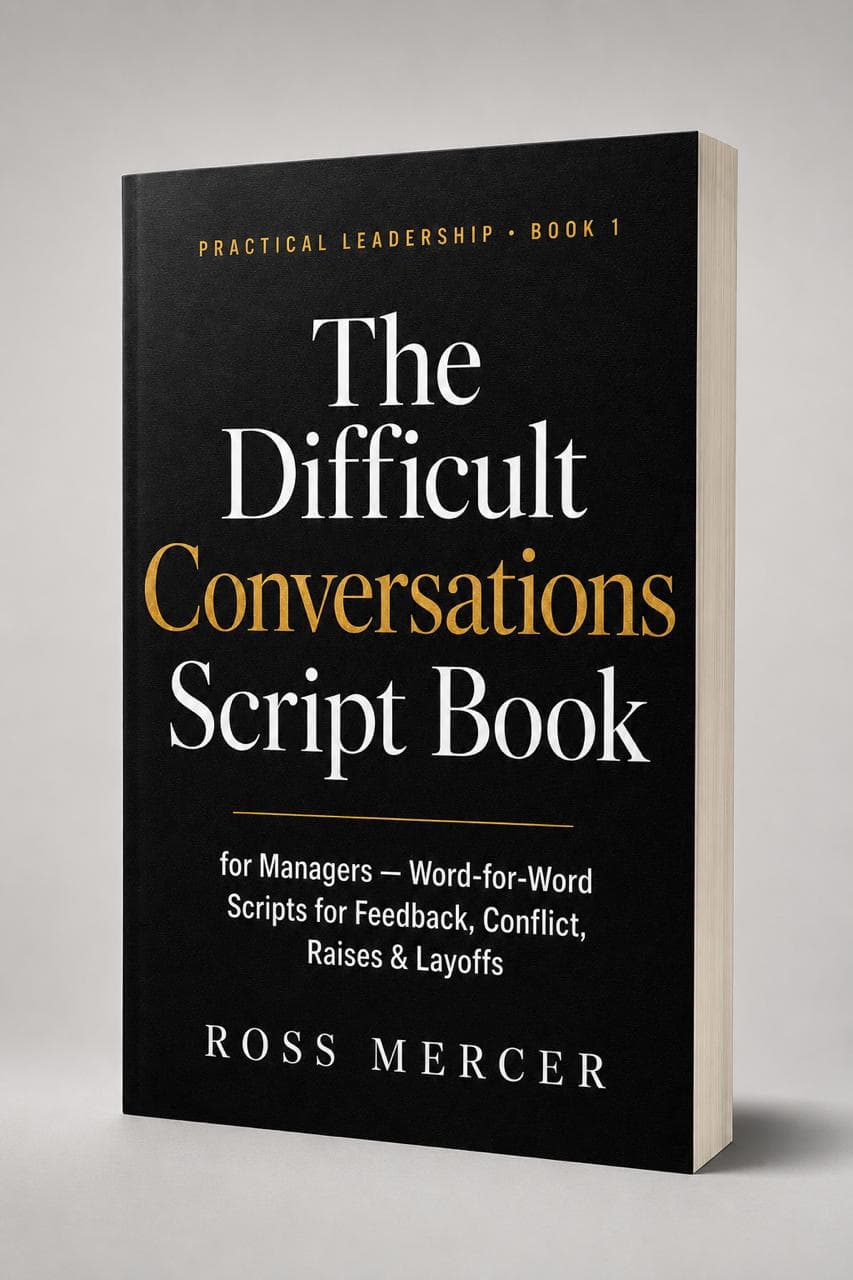
The Difficult Conversations Script Book
Word-for-word scripts for feedback, conflict, raises, and layoffs. E-book $14.99 · with the Conversations Toolkit $79.