How do you tell an employee they didn’t get the promotion?
By Ross Mercer · Updated
Tell the employee yourself, in private, before the decision is announced. Name the outcome in your first sentence, give two or three specific reasons the role went elsewhere, then pause and let them react. Only after that, lay out a concrete path to the next opportunity, or say honestly if this track isn’t the right one.
Why does this conversation matter so much?
Few conversations shape a working relationship like this one. Handle it badly and a strong performer walks out feeling invisible, and often starts looking elsewhere. Handle it well and you keep someone who now knows you will tell them the truth, even when it is bad news.
Advancement is not a side issue for people deciding whether to stay. In a 2022 Pew Research Center survey, 63% of U.S. workers who quit a job in 2021 said no opportunities for advancement was a reason they left.
What makes the difference is specificity. “You’re not quite ready” without detail is the answer that makes people quit. “The gap was owning a cross-functional project end to end, and here is how you get one” is an answer someone can act on.
What should you prepare before you tell them?
- The concrete why: the two or three specific things that weren’t there yet, or the specific edge the other candidate had.
- The timing. Tell them before the decision is public or the new person is announced. Hearing it from a calendar invite or a team channel is a betrayal people remember.
- Which message this is. “Not yet, and here’s the path” and “this probably isn’t the track for you” are very different conversations. Don’t blur them to be kind.
- Message
- Not yet
- Use it when
- The gap is specific and closable
- What follows
- A written development path, resourced, with a check-in date
- Message
- Not this track
- Use it when
- The role doesn’t fit their strengths, and a year won’t change that
- What follows
- An honest redirect toward where they are strongest
A script for telling someone they didn’t get the promotion
This is the core of Script 7 in The Difficult Conversations Script Book. Fill in the brackets with the real reasons, not a polite summary.
“[Name], I wanted you to hear this from me before it goes any wider. The [Senior X role] is going to [someone else]. I know that’s not what you were hoping for, and you deserve the reasons. Here’s where the decision came down: you’re strong on [delivery, and the team trusts you], and the gap was [you haven’t yet owned a cross-functional project end to end]. It wasn’t close on [the strengths]; it came down to [the specific gap]. I don’t see this as the end of the road. If you want it, here’s what I think gets you there, and I’ll help: [the specific path]. But first, how are you doing with this? Take a second.”
Why pause before the development plan?
After the no, stop talking. Give it a moment. Rushing to the growth plan while the person is still absorbing the news feels like you are brushing past their disappointment to get to the comfortable part.
Expect the first conversation to be mostly absorption. If it fits, offer a second, shorter talk a day or two later for the path itself. On a remote team, time the call so they hear it from you before anything shows up in a channel; if you can’t guarantee that, delay the announcement.
How do you respond when they push back?
- “I’ve done everything you asked. What more do you want?” This is where specificity earns its keep: “You have. That’s why this is a not-yet. The one piece that wasn’t there is [the specific gap]. Let me show you what closes it.”
- “Was this decided before you even looked at me?” Answer with what you know: “Not as far as I know. I was part of it, and here’s what tipped it. And here’s the part that was close.” Naming what was close makes the rest believable.
- “The job went to an outsider.” Expect the sting of “why didn’t you grow your own people,” and answer it: what the role needed right now, and how you will invest in them so it is them next time.
- They argue every point. Don’t debate the decision line by line. Acknowledge the context, then return to the one gap: “That’s useful context. The piece that decided it was still [the gap].”
What should you not say?
- “You were a really close second.” Only if it is true and you can say what the difference was. Otherwise it invites “so why not me?”
- “It was a tough decision.” Generic, and it puts your difficulty ahead of their disappointment.
- “There’ll be other opportunities.” Name a specific one or don’t say it.
- “Don’t take it personally.” It is personal to them. Telling them not to feel it doesn’t work.
- The other candidate’s highlight reel. Talk about their path, not the winner’s virtues.
- “You’re a year away” when you know they aren’t. A kind lie here can waste years of someone’s career.
What if they say the decision was unfair or biased?
Hear it fully before you defend anything. Sometimes the process was flawed, and you should own that part if it is real. But if the concern is about bias, don’t argue it out alone. Treat it seriously and bring HR in: “That’s serious, and it should be looked at properly, by more people than me.”
There is a legal reason as well as a human one. According to the U.S. Equal Employment Opportunity Commission, “It is illegal for an employer to make decisions about job assignments and promotions based on an employee’s race, color, religion, sex (including transgender status, sexual orientation, and pregnancy), national origin, age (40 or older), disability or genetic information.”
From that moment, be careful with anything that affects the person: assignments, ratings, the path you promised. The EEOC’s retaliation guidance names a lower-than-deserved performance evaluation and a transfer to a less desirable position among possible retaliation. Run those decisions past HR first. This page is general information, not legal advice.
What should you do in the week after?
Within a few days, put the development path in writing: the specific gaps and the experiences that close them. Then start opening doors to those experiences. Check in again the following week, because the second conversation is where people decide whether to re-commit or look elsewhere.
Watch your own follow-through hardest here. A promised path you don’t fund is how you lose someone three months later, so promise only what fits how promotions actually work at your company. For the opening itself, see how to start a difficult conversation with an employee.
Sources
- U.S. EEOC — Prohibited Employment Policies/Practices (Job Assignments & Promotions)
- U.S. EEOC — Retaliation
- Pew Research Center — Majority of workers who quit a job in 2021 cite low pay, no opportunities for advancement, feeling disrespected (March 9, 2022)
More guides
- How do you give negative feedback to an employee?
- How do you start a difficult conversation with an employee?
- What should a first-time manager know before their first difficult conversation?
- How do you put an employee on a performance improvement plan (PIP)?
- How do you talk to your team about AI changes at work?
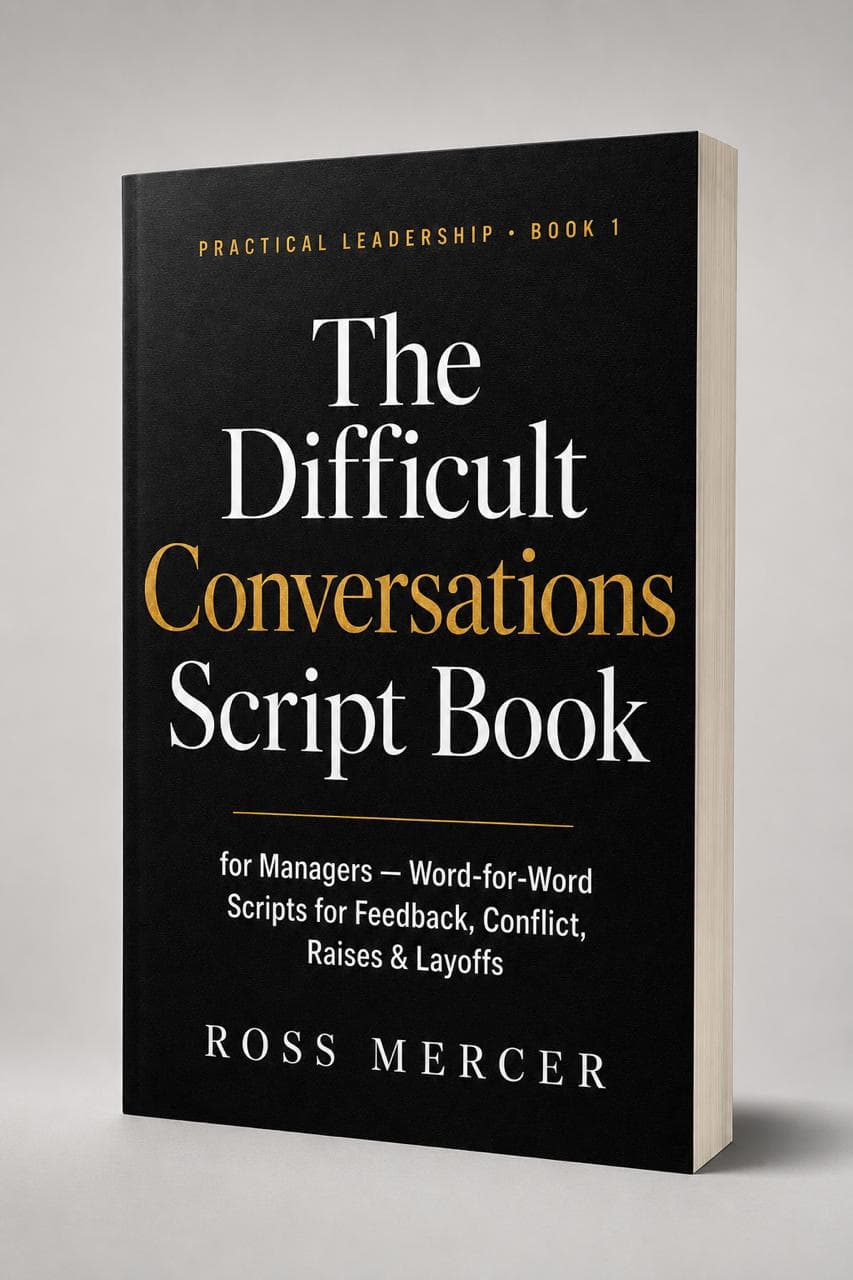
The Difficult Conversations Script Book
Word-for-word scripts for feedback, conflict, raises, and layoffs. E-book $14.99 · with the Conversations Toolkit $79.