How do you make a decision when you don’t have all the information?
By Ross Mercer · Updated
Decide on the information you can get in time, not the information you wish you had. Split what you don’t know into what a bounded effort could find out and what nobody can know yet, think in ranges instead of single numbers, lean toward the option you can undo, and set a date and signal to check.
Can the missing information be known in time?
This is the most useful cut you can make. Some uncertainty is reducible: the answer exists and a bounded effort would get it. Nobody pulled the current licensing cost, but a half-hour query would. If that answer would change the decision and you can get it before the deadline, go get it.
Much uncertainty is irreducible in the time you have. No analysis tells you how a new hire will do in month four or whether an untried approach will work, because the information doesn’t exist yet. Waiting buys only a later version of the same ignorance.
Hiring shows the split clearly. Whether a candidate holds the certification they listed is a five-minute check. Whether references describe someone who handles angry callers well takes two phone calls. Whether they will be good in month four only month four can answer, so more interviews mostly tell you how they interview.
How much information is enough to decide?
Less than feels comfortable. In his 2016 letter to Amazon shareholders, Jeff Bezos wrote that “most decisions should probably be made with somewhere around 70% of the information you wish you had. If you wait for 90%, in most cases, you’re probably being slow.” He added the condition that makes it work: you need to be good at noticing and correcting bad calls.
Turn that into a stopping rule, written before you gather anything: “I will decide by [date], once I have [a short, specific list], regardless of what else turns up.” Something else always turns up. The rule is your earlier, calmer commitment to ignore it.
When you hear yourself say “let me just check one more thing,” ask: if this comes back the way I expect, will I do anything differently? If not, you are buying comfort, not information, and paying for it in days.
Why can more data make the decision worse?
Past a point, more information raises confidence without raising accuracy. In three studies, Tsai, Klayman, and Hastie (2008) found that “when judges receive more information, their confidence increases more than their accuracy, producing substantial confidence–accuracy discrepancies.” You end up surer than your evidence supports.
So decide what would change your mind before you look. Write your current lean, then the specific findings that would flip it: not “if the numbers are bad” but “if more than a quarter of open tickets are older than five business days.” Read the data only for those. For any other number, ask what you would do if it doubled or halved. If the answer is “nothing,” it is not part of this decision.
Why think in ranges instead of single numbers?
One number on an uncertain question throws away the most important thing you know: how unsure you are. Two forecasts can share a headline figure while one is a near-lock and the other a coin flip.
Ask for the spread: a plausible bad case, a plausible good case, and the one factor that decides where you land. Say a vendor promises its service will “absorb about forty tickets a week,” and the honest range is fifteen to fifty, depending on how many tickets are simple enough for them to close. That factor is often something you can count yourself in twenty minutes, which turns an argument about the vendor’s number into a fact.
Attach rough odds to your own view as well. Acting on “about 60%” is normal. The trouble starts when you act on 60 while telling yourself it is 95, because then you skip the safeguards.
How do you check your estimate against similar cases?
Before forecasting how your case will go, ask how cases like it usually go. Daniel Kahneman and Dan Lovallo described the “inside view” in a 1993 Management Science paper: forecasts anchored on the specific plan, which tend to run optimistic because the plan contains the steps you thought of, not the problems you didn’t.
- Name the reference class, such as “platform migrations at small firms” or “senior hires into client-facing roles.”
- Find the usual result: ask people who have done it, or check your own past cases in a decision log.
- Adjust from that base rate, not from your plan, for what genuinely makes your case faster or slower.
Which option should you pick when you can’t be sure?
Lean toward the one you can undo. If you can’t tell which path is right and one is cheap to walk back, it limits the damage of being wrong. High uncertainty plus reversibility is manageable. High uncertainty plus irreversibility is the combination that should slow you all the way down. The guide to reversible and irreversible decisions shows how to tell them apart.
Then name the two or three assumptions the call rests on, each with an early signal that it is wrong and a date to check. A reversible choice you never revisit is an irreversible choice with extra steps.
How do you say “I don’t know” to your boss?
Attach the uncertainty to a plan. Give your honest odds, the one factor that decides it, the date you will know more, and the exit. For example: “Probably, about two chances in three. What decides it is [factor]. I’ll know by [day 14], and it’s month-to-month, so if it isn’t working we stop and I come back with [plan B].” That answer sounds like homework done, not homework skipped.
Was it a bad decision or a bad outcome?
A sound decision can produce a bad result, and the result alone can’t tell you which you made. A bad decision is one you would change knowing only what you knew then: you ignored available information, skipped an obvious check, or locked in when you could have tested cheaply. If none of that happened, there is nothing in the process to fix. Writing your reasoning down before the outcome, in a decision log, is what makes that judgment honest later.
Sources
- Amazon.com, Inc. — 2016 Letter to Shareholders (Exhibit 99.1, Form 8-K, April 12, 2017)
- Tsai, Klayman & Hastie (2008), Effects of amount of information on judgment accuracy and confidence, Organizational Behavior and Human Decision Processes 107(2)
- Kahneman & Lovallo (1993), Timid Choices and Bold Forecasts: A Cognitive Perspective on Risk Taking, Management Science 39(1)
More guides
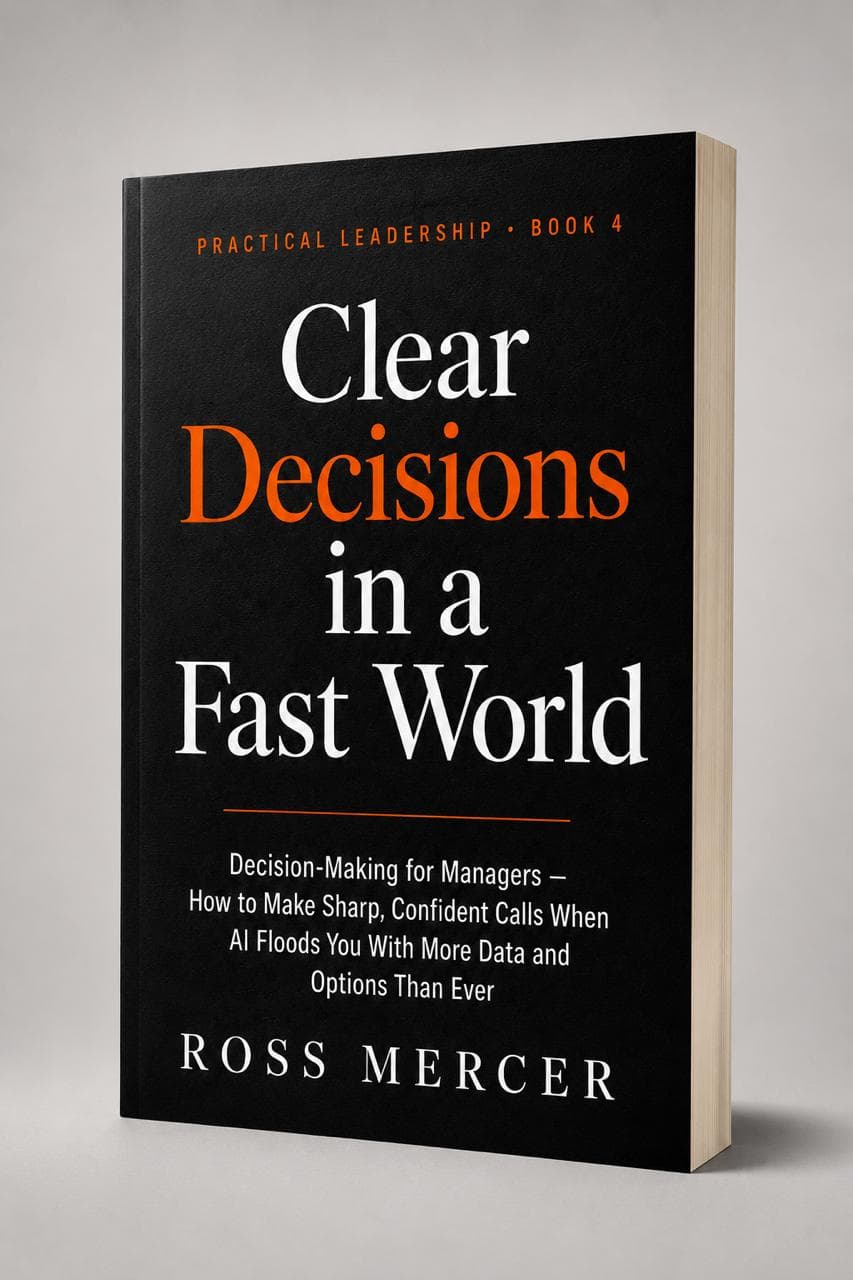
Clear Decisions in a Fast World
Make sharp, confident calls when AI floods you with more data and options than ever. E-book $14.99 · with the Decision Toolkit $79.